
What games and pastimes are popular in assisted living?
Residents in assisted living often enjoy familiar activities that encourage conversation, gentle movement, creativity, or friendly competition. Favorite choices may include card games, bingo, puzzles, music, crafts, reading groups, gardening, and seasonal gatherings.
Activities are usually most successful when residents can participate at different skill levels. A person who prefers quiet concentration may enjoy a puzzle or word search, while someone who likes social interaction may prefer a group game, sing-along, or discussion circle. The goal is not simply to stay busy. Meaningful pastimes can support routine, independence, memory, confidence, and connection with other residents.
Which games work well for different abilities?
There is no single “best” game for everyone. The right choice depends on vision, hearing, hand coordination, memory, attention span, and personal interests.
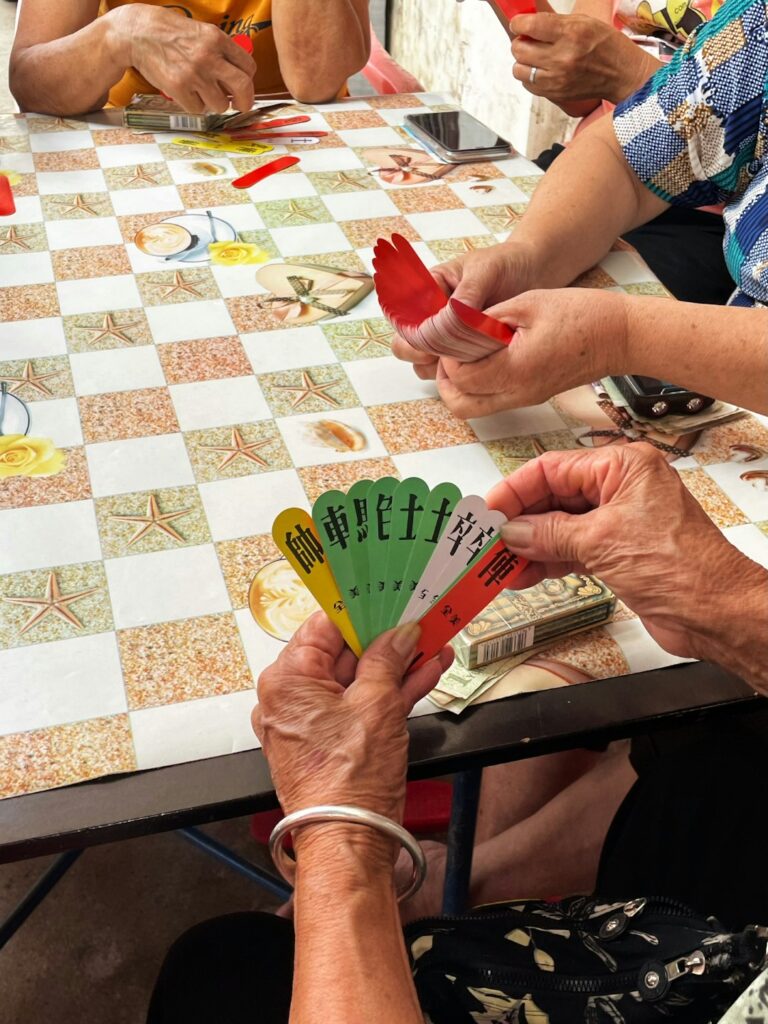
Card games
Card games remain popular because they can be played at a table, adjusted for ability, and enjoyed by two people or a larger group. Familiar options include:
- Uno-style matching games
- Go Fish
- Bridge or pinochle for experienced players
- Rummy
- Solitaire
- Simple sorting or matching games
Large-print cards and high-contrast designs can help residents with reduced vision. A card holder may be useful for someone who has arthritis, weakness, or limited hand movement.
Bingo
Bingo is easy to understand and provides a predictable structure. It also creates opportunities for conversation between rounds. Large-print cards, brightly marked spaces, and a slower pace can make the game more accessible.
Bingo does not need to be limited to numbers. Picture bingo, music bingo, and themed versions can add variety while supporting recognition and recall.
Board games and tabletop games
Board games can be adapted by shortening the playing time, reducing the number of pieces, or focusing on one part of the game. Checkers, dominoes, Chinese checkers, and simple word games are often easier to follow than games with many rules.
Some residents may enjoy strategy and competition, while others prefer cooperative play. In a cooperative game, players work toward a shared goal rather than competing against one another. This can reduce frustration for people who do not enjoy losing.
Puzzles and brain games
Crossword puzzles, word searches, jigsaw puzzles, trivia, and number games offer mental stimulation without requiring a group. Difficulty should be matched to the individual. A puzzle that is too challenging may feel discouraging, while a familiar activity can provide a satisfying sense of accomplishment.
Large-piece jigsaw puzzles, large-print books, and short trivia sessions can be useful for residents who tire easily or have difficulty focusing for long periods.
What pastimes are enjoyable for residents who do not like games?
Not everyone enjoys competition, and participation should never depend on liking games. Many residents prefer creative, cultural, practical, or reflective activities.
Common alternatives include:
- Painting, coloring, or watercolor projects
- Knitting, crocheting, or simple sewing
- Scrapbooking and family-history projects
- Reading groups or audiobook discussions
- Listening to familiar music
- Watching classic films followed by conversation
- Writing letters, memories, or short stories
- Caring for indoor plants
- Baking demonstrations or simple food-preparation activities
- Seasonal decorating
- Bird-watching from a window or outdoor sitting area
Music is especially flexible. A resident can sing, listen, request a favorite song, play a simple instrument, or talk about memories connected to a particular style of music. Participation can be active or quiet.
How can activities support memory and conversation?
Familiar activities often give residents natural reasons to remember, explain, choose, and share. A discussion about holiday traditions, school days, favorite recipes, or childhood games may prompt stories even when other forms of conversation are difficult.
Reminiscence activities work best when they are respectful and open-ended. Instead of testing someone with questions such as “Do you remember this?”, a facilitator might ask, “What kind of music did your family enjoy?” or “What games were common in your household?”
Memory-supportive activities may include:
- Looking through photographs or picture cards
- Matching objects by color, shape, or category
- Completing familiar sayings or song lyrics
- Discussing local seasons and household traditions
- Sorting buttons, postcards, recipes, or craft materials
- Reading short articles and sharing opinions

These activities should not be treated as tests of memory. The purpose is engagement, conversation, and enjoyment.
How can activities work during winter and bad weather?
Seasonal conditions can affect routines in Munhall, PA, especially during cold weather, snow, ice, and periods when outdoor walking is less comfortable. Indoor options help residents maintain social contact and daily structure when outdoor activities are limited.
A winter activity calendar might include indoor gardening, warm beverage gatherings, music programs, craft sessions, movie discussions, and hallway walking paired with conversation. Clear walkways, comfortable room temperatures, suitable lighting, and accessible seating are practical details that affect whether residents can participate safely.
Outdoor activities may still be possible during mild weather. Short supervised walks, time on a patio, container gardening, or sitting near a landscaped area can provide fresh air without requiring a long outing. Residents should be able to choose whether they want active participation, observation, or rest.
What makes an activity comfortable and inclusive?
A good activity is organized around the residents rather than around a rigid schedule. Some people prefer mornings, while others have more energy later in the day. Short sessions may work better than programs that last an hour or more.
Helpful adjustments include:
- Offering seated and standing options
- Using large-print instructions
- Reducing background noise
- Providing good lighting without glare
- Allowing extra time for responses
- Keeping rules simple and explaining them more than once
- Using lightweight materials
- Offering alternatives for residents with hand pain or limited dexterity
- Making participation optional
- Avoiding public pressure to perform
Hearing aids, glasses, mobility devices, and other personal equipment should be accommodated without drawing unnecessary attention to them. A resident may enjoy being present even if they do not complete the activity.
Should family members bring games or hobby supplies?
Family members may bring a favorite game, photo album, music collection, craft project, or large-print book, provided the item is safe and suitable for the resident’s space. Familiar materials can make an activity more personal and may help a resident feel connected to home.
Before bringing anything, it is useful to consider whether the items are easy to store, simple to clean, and safe for the resident to handle. Small pieces may be unsuitable for someone with swallowing risks, poor vision, or confusion. Strong scents, loose cords, and complicated equipment can also create problems.
The most valuable contribution is often participation. Sitting together for a short card game, looking through photographs, listening to music, or completing a puzzle can be more meaningful than bringing a large collection of supplies.
How can residents choose activities that fit their interests?
Residents can start by identifying what they enjoyed before moving into assisted living. Favorite pastimes may include activities from work, family life, faith traditions, school years, or community involvement. Someone who once enjoyed cooking may prefer recipe discussions or kitchen demonstrations. A former gardener may enjoy plant care. A person who worked with numbers may like budgeting games, scorekeeping, or number puzzles.
Interests can also change after a move. A resident who never joined group activities may discover that a small gathering feels comfortable, while someone who enjoyed busy social events may later prefer quieter activities. Trying an activity once does not create an obligation to continue.
The strongest activity programs leave room for choice: joining a group, inviting another resident to play, pursuing a hobby independently, or simply observing. Games and pastimes are most meaningful when they support dignity, familiarity, and genuine enjoyment rather than treating recreation as a requirement.
